One of the most common things I hear from new patients is some version of the same story.
They’ve cleaned up their diet. They’ve taken supplements. They’ve tried fasting, hormone therapy, detox programs, gut protocols, and countless recommendations from books, podcasts, social media, and well-meaning practitioners. Some have spent years searching for the missing piece.
Yet despite all of that effort, they still don’t feel like themselves.
Their energy remains inconsistent. Their weight doesn’t respond the way they expect. Sleep continues to be a struggle. Symptoms improve temporarily, only to return a few months later.
Over time, many begin to wonder if they simply haven’t found the right protocol.
I see it differently.
After more than twenty years of practice, I’ve come to believe that one of the biggest reasons people struggle is not because they’re doing the wrong things. In many cases, they’re doing the right things at the wrong time.
This idea eventually became one of the foundational principles of my work:
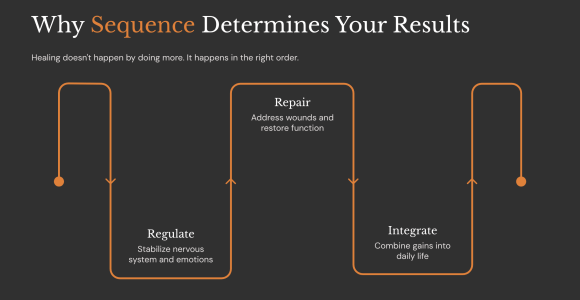
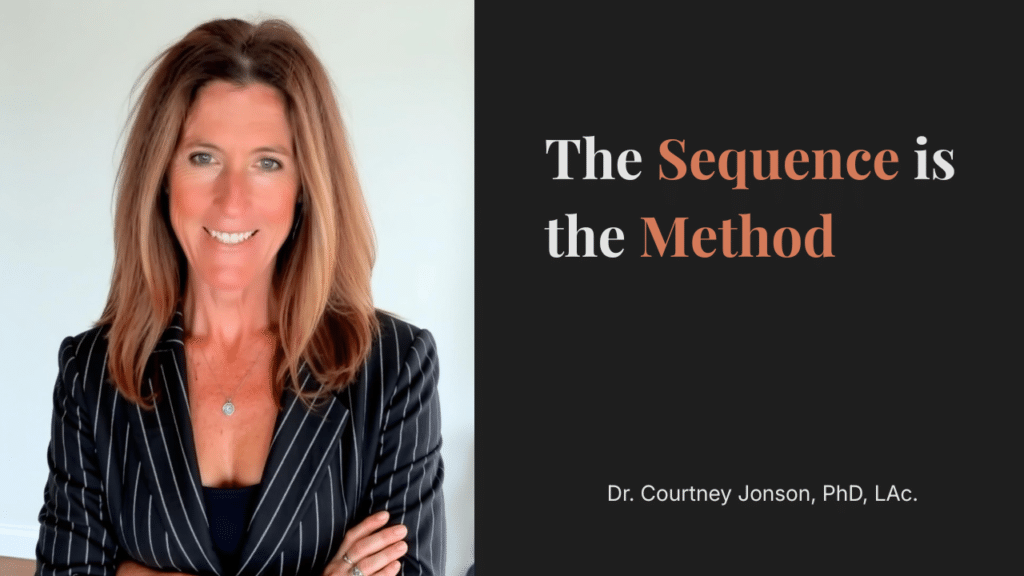
Watch – The Sequence Is the Method.
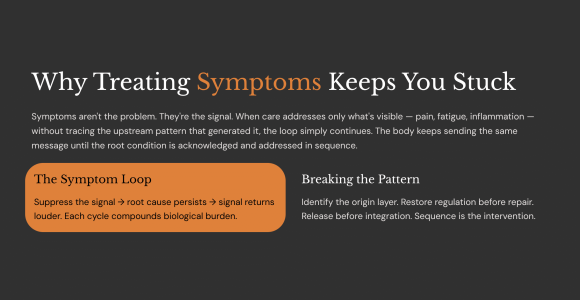
The right intervention at the wrong time often fails. The right intervention in the right sequence often changes everything.
Why Good Protocols Sometimes Produce Poor Results
Imagine buying an older home that has been neglected for years. The roof leaks, water has found its way into the walls, and the foundation has begun to shift. Now imagine hiring a contractor who walks into the house and immediately starts painting the living room.
The paint isn’t the problem.
In fact, the paint may be beautiful.
The problem is that the structure underneath hasn’t been addressed.
Until the foundation is stabilized and the source of the water intrusion is repaired, the cosmetic improvements are unlikely to last.
I often think about healing in much the same way.
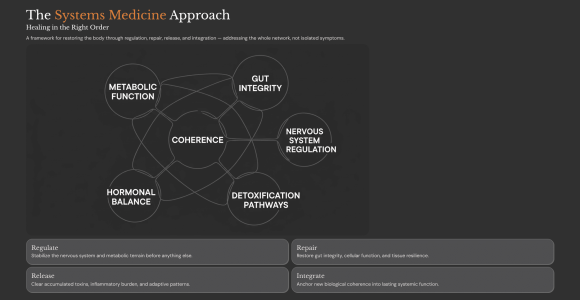
Many people begin their health journey with interventions that are designed to optimize physiology before the body has the capacity to respond appropriately. They pursue aggressive detoxification before establishing stability. They focus on hormones before addressing blood sugar regulation. They look for advanced solutions while foundational systems remain overwhelmed.
The intervention itself may be useful. The challenge is that biology tends to operate according to priorities.
The Body Has Priorities
One of the most important shifts in my clinical thinking occurred when I stopped asking what protocol a person needed and started asking what their physiology needed next.
The body is remarkably intelligent. Every day it is making decisions about where to allocate energy and resources. If the nervous system perceives ongoing threat, if blood sugar is highly unstable, if sleep is fragmented, or if recovery capacity is depleted, the body will prioritize survival over optimization.
This isn’t a flaw in the system.
It’s exactly what the system was designed to do.
We often assume that healing is something we force through enough effort, discipline, or intervention. In reality, healing is often the result of creating conditions that allow the body to shift out of survival mode and into restoration.
This is why timing matters.
And it’s why sequence matters even more.