
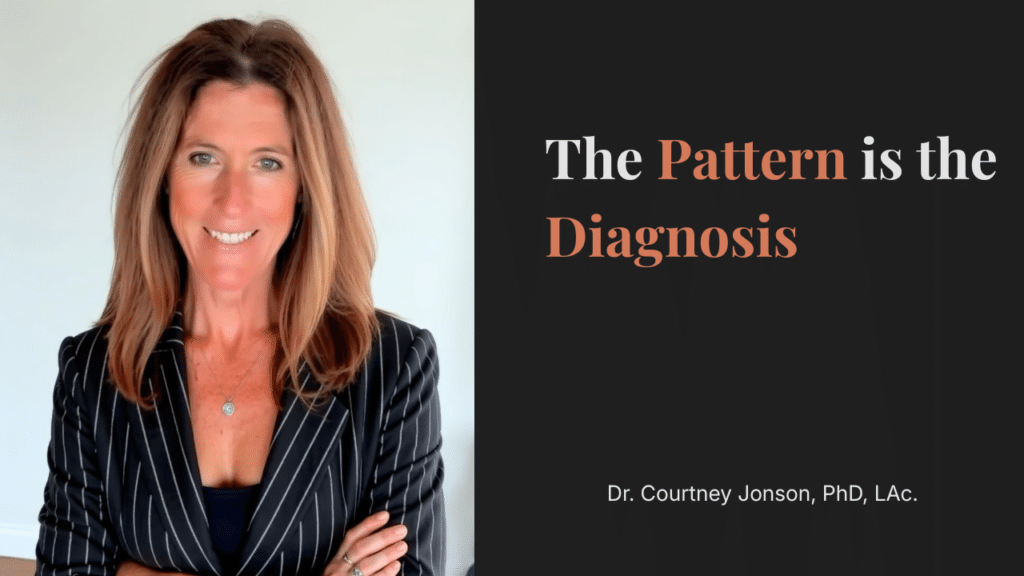
Most people enter the healthcare system looking for answers to a simple question:
“What is wrong with me?”
They want a diagnosis. A name. A label that explains why they feel the way they do.
And while diagnoses can be useful, I’ve come to believe they are often only part of the story.
After more than twenty years of working with patients, reviewing thousands of blood chemistry panels, and studying the progression of chronic disease, I’ve observed something that fundamentally changed the way I think about health.
Symptoms rarely occur in isolation.
They tend to travel in groups.
The woman struggling with fatigue often has digestive complaints. The person experiencing blood sugar instability frequently has sleep disturbances. The patient with autoimmune symptoms commonly has a history of digestive dysfunction, stress overload, or inflammatory burden.
Different people. Different diagnoses. Different symptoms.
Yet remarkably similar physiological patterns.
This observation became one of the foundational doctrines of my work:
Watch the Video Below
Why Diagnoses Often Arrive Late
Modern medicine excels at identifying disease once it becomes visible enough to measure, classify, and name.
This approach has given us tremendous advances in healthcare. If I were experiencing a heart attack, severe infection, traumatic injury, or surgical emergency, there is nowhere else I would want to be.
The challenge is that many of today’s most common health concerns don’t develop overnight.
Conditions such as insulin resistance, cardiovascular disease, autoimmune disorders, hormonal dysfunction, depression, and cognitive decline often develop gradually over many years.
Long before a diagnosis appears, the body begins sending signals.
Energy changes.
Sleep changes.
Digestion changes.
Mood changes.
Recovery changes.
Blood chemistry begins shifting.
Patterns emerge.
The problem is that many people have been taught to look for disease rather than dysfunction. We wait for a diagnosis to confirm that something is wrong, while overlooking the physiological changes that may have been developing for years.
By the time a diagnosis is made, the body has often been adapting for a very long time.
The diagnosis is not the beginning of the story.
It is often the final chapter.
The Difference Between a Label and a Pattern
A diagnosis tells us what a condition is called.
A pattern helps explain how it developed.
Consider insulin resistance. Few people wake up one morning and suddenly become insulin resistant. The process typically unfolds gradually through years of blood sugar instability, changes in body composition, increasing inflammatory burden, altered energy production, and declining metabolic flexibility.
The diagnosis simply marks the point at which the pattern became visible enough to name.
The same can be said for many chronic health conditions.
Hashimoto’s thyroiditis often develops long before thyroid antibodies become elevated. Cardiovascular disease develops years before a cardiac event. Metabolic dysfunction frequently exists long before diabetes is diagnosed.
When we focus exclusively on diagnosis, we risk missing the years of physiological adaptation that preceded it.
When we focus on patterns, we gain the opportunity to intervene earlier.
Why So Many People Feel Unwell Despite “Normal” Labs
One of the most common statements I hear from new patients is:
“My doctor told me everything looks normal.”
Yet the person sitting in front of me often feels anything but normal.
They may be exhausted, struggling with weight gain, waking throughout the night, experiencing digestive symptoms, battling anxiety, or noticing changes in cognition and mood.
This disconnect creates tremendous frustration.
Part of the reason is that conventional laboratory reference ranges were designed primarily to identify disease. Their purpose is to determine whether a value has become abnormal enough to warrant further investigation or treatment.
In Systems Medicine, we ask a different question.
Rather than asking whether disease is present, we ask whether adaptation is already occurring.
This approach often involves evaluating blood chemistry through a functional lens, looking for subtle physiological shifts that may reveal patterns long before pathology develops.
The goal is not to diagnose disease earlier.
The goal is to recognize dysfunction earlier.
The Five Patterns I See Most Often
After reviewing thousands of patient histories and laboratory assessments, I began noticing that most chronic health complaints tend to organize around a relatively small number of recurring physiological patterns.
While every individual is unique, certain themes appear repeatedly.
The first is blood sugar dysregulation. Most people associate blood sugar with diabetes, but its influence extends far beyond glucose control. Blood sugar affects energy production, inflammation, hormone signaling, nervous system regulation, sleep quality, and metabolic health. When blood sugar becomes unstable, the effects ripple throughout the body.
The second is stress chemistry dysregulation. Chronic stress influences virtually every major physiological system, including digestion, immune function, hormone production, cognition, recovery, and sleep. Many individuals spend years adapting to ongoing stress before the consequences become visible.
The third is gut and immune dysregulation. The digestive system is not simply responsible for processing food. It is deeply involved in immune regulation, neurological signaling, hormone metabolism, and inflammatory balance. When gut function becomes compromised, symptoms may appear far beyond the digestive tract.
The fourth is inflammatory overload. Inflammation is an essential survival mechanism, but when it remains chronically activated, it can influence virtually every system in the body.
The fifth is what I often refer to as adaptive reserve decline. Over time, the cumulative demands placed on the body can begin to exceed available resources, reducing resilience, recovery capacity, and overall physiological flexibility.
These patterns may express themselves differently from one person to another, but they often represent different chapters of the same story.
Everything Talks to Everything
Perhaps the most important concept in Systems Medicine is this:
Everything talks to everything.
Blood sugar influences hormones.
Hormones influence the nervous system.
The nervous system influences digestion.
Digestion influences immune function.
Immune function influences inflammation.
Inflammation influences virtually every physiological process.
The body functions as an integrated system.
Yet healthcare is often organized around specialties that examine individual parts in isolation.
The endocrinologist focuses on hormones.
The gastroenterologist focuses on digestion.
The neurologist focuses on the nervous system.
The cardiologist focuses on the heart.
Each perspective has value.
The challenge is that the body does not operate in separate departments.
The body operates as a network.
When we reconnect these systems, symptoms that once appeared unrelated begin to make sense.
The patient with fatigue, anxiety, constipation, weight gain, insomnia, and brain fog no longer appears to have six separate problems.
Instead, we begin to see one coherent physiological pattern expressing itself through multiple channels.
Learning to Read the Story
This is why every client relationship in my practice begins with a comprehensive Case Review.
Symptoms matter.
History matters.
Lifestyle patterns matter.
Blood chemistry matters.
Sleep, stress, nutrition, movement, and recovery all matter.
Each piece provides part of the story.
Together, they reveal the pattern.
Once we understand the pattern, we can stop chasing symptoms and begin addressing the underlying physiological drivers that connect them.
Because healing becomes much easier when we understand the story the body has been trying to tell.
Looking Beyond the Diagnosis
The goal of Systems Medicine is not to ignore diagnoses.
Diagnoses have value.
They help us communicate, classify, and organize information.
But if we stop there, we often miss the bigger picture.
The diagnosis tells us what happened.
The pattern helps explain why.
And when we understand the pattern, we gain the opportunity to change the trajectory of health before dysfunction becomes disease.
The body is constantly communicating.
Our job is to learn how to listen.
Because the pattern is often there long before the diagnosis arrives.
And when we learn to recognize that pattern, everything begins to look different.
Ready to Understand Your Pattern?
At Systems that Heal, every client begins with a comprehensive Case Review designed to identify the physiological patterns influencing energy, metabolism, hormones, inflammation, recovery, and resilience.
Because before we ask what protocol someone needs, we first ask a more important question:
What pattern has the body been expressing?
If you’re ready to understand your physiology through a systems-based lens, we’d be honored to help.


